
By the Southern Cross team | 2-3 minute read
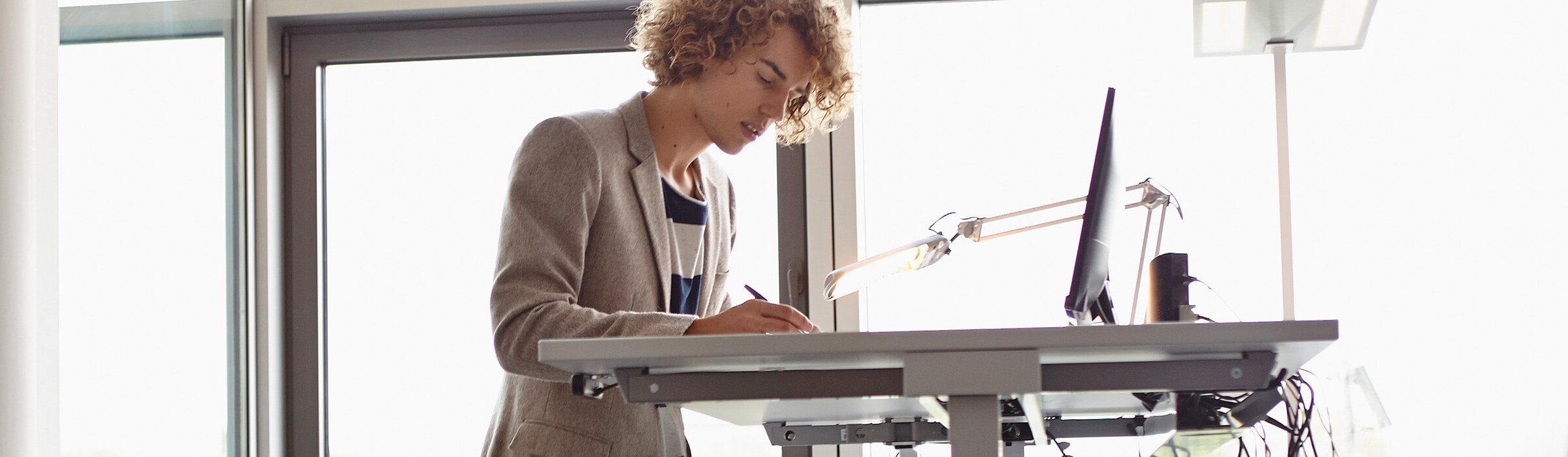
Have you ever noticed just how much time you spend sitting down every day? Whether it's staring at a screen, traveling to and from work or sitting at a desk all day, it all adds up. Yet the simple fact is that our bodies just weren't designed to sit for long periods, and this sedentary lifestyle is beginning to take its toll.
Historically, we humans are not naturally sedentary creatures. Whether tending to crops or out hunting wild beasts, for most of our existence we've lived on our feet. But with the advent of TV, computers and desk jobs we're sitting down more than we ever have before - roughly 9.3 hours a day on average. That's even longer than an average sleep.
And this relatively new behaviour can have serious consequences for our health, our weight, our posture and ultimately how long we can expect to live.1
A sedentary lifestyle is defined as one where an individual does not take part in regular amounts of physical activity. The Ministry of Health recommends we do at least 2.5 hours of moderate activity or 1.25 hours of vigorous activity spread over a week - or more for extra benefits.
Are you sitting comfortably? You might not be after this. If you spend most of the day sitting - in your car, your office chair, on your sofa at home - you are putting yourself at increased risk of obesity, diabetes, heart disease, a variety of cancers and an early death. In other words, irrespective of whether you exercise vigorously, sitting for long periods is bad for you. Longer commutes to work are also correlated with poor outcomes relating to BMI (Body Mass Index), waist circumference and blood pressure.2 It doesn't get any better when we get home either. Settling in for a marathon session of your favourite TV show has been related to fatigue, obesity, loneliness and depression.3
The good news is it's easy to do something about it. There are plenty of simple changes you can make in your everyday lifestyle to switch the odds back in your favour:
Sitting time adds up wherever you are, so don't let it. Alternating sitting and standing throughout the day burns more calories, and can even help you lose weight. Try and interrupt sitting time whenever you can. For instance, you could introduce a rule that you only ever use your phone while standing. Or if you're at work, suggest having standing meetings. It might even make everyone focus better and result in shorter meetings!
This one's even easier. For short journeys, choose active over passive. For example, walk or ride your bike instead of taking the car. Choose the stairs over the lift. Or in the office, instead of sending an email, go and talk to someone face-to-face. You could also make walking a habit and set aside a specific time of day. You might be surprised how soon it becomes second nature.
If standing isn't always an option, try this. Every 55 minutes, ensure you get up and move around for 5 minutes. It could be a trip to the local dairy, a walk around the block or just around the garden or office - it doesn't matter as long as it gets you off your posterior and onto your feet.
So don't take life sitting down. Stand up, get more active, and take back control of your health and wellbeing.http://time.com/4632839/work-standing-burn-calories/
https://www.lifehack.org/articles/lifestyle/why-sitting-is-killing-you.html
https://www.lifespanfitness.com/workplace/resources/articles/health-risks-of-a-sedentary-lifestyle
NZ Statistics


Southern Cross Medical Care Society (trading as Southern Cross Health Society) is a licensed insurer and a licensed financial advice provider. For more information about the financial advice service we provide and a copy of our public disclosure statement please visit southerncross.co.nz/disclosure-statement.
Southern Cross Medical Care Society (trading as Southern Cross Health Society) has an A+ (Strong) financial strength rating given by Standard & Poor’s (Australia) Pty Limited. The rating scale is: AAA (Extremely Strong), AA (Very Strong), A (Strong), BBB (Good), BB (Marginal), B (Weak), CCC (Very Weak), CC (Extremely Weak), SD or D (Selective Default or Default). Ratings from ‘AA’ to ‘CCC’ may be modified by the addition of a plus (+) or minus (-) sign to show relative standing within the major rating categories. Full details of the rating scale are available at www.spglobal.com/ratings/en/about/intro-to-credit-ratings. Standard & Poor’s is an approved rating agency under the Insurance (Prudential Supervision) Act 2010.